
Price matters. But it’s a small factor. A low quote becomes expensive when you choose the wrong fabric, the fit requires various revisions, and minimum orders require excess stock. Select a clothing manufacturer who understands your specifications, talks to you clearly, and mutually agrees on the budget and given time.
Follow the given 5 steps to find the right clothing manufacturer.
1. Before Contacting Factories, Compile Your Product Details
“Premium clothing” has different meanings for different suppliers. When you ask the right questions, they can better understand your requirements and confirm the details.
You should prepare:
- Product: Specific garment type, reference images, and required fit.
- Fabric: Intended composition, weight, stretch, and finish.
- Quantity: Units for every style and color, with a size breakdown.
- Budget: Target manufacturing cost per garment.
- Timing: When should the finished order arrive?
- Support: Patternmaking, sourcing, sampling, or production.
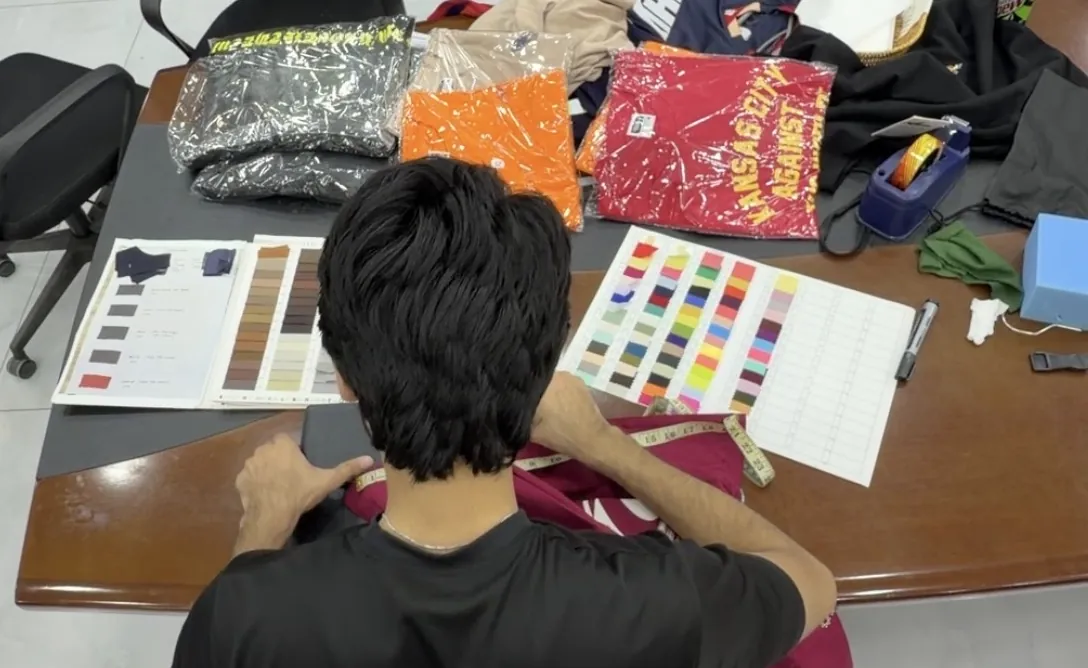
Make a thorough tech pack document. It helps suppliers understand measurements, materials, construction, and artwork placements. If you don’t have one, ask them if they offer development support along with their charges.
2. Choose the Specific Manufacturing Service
Before comparing prices, confirm which services a supplier provides. Some brands need help developing a product from a reference image. Others have materials and patterns ready.
| Manufacturing Option | Suitable When? |
|---|---|
| Private label | You need existing styles customized with your branding. |
| Custom cut and sew | You want your own fit, pattern, or construction. |
| Full package production | You require development, sourcing, and manufacturing support. |
| Cut, make, trim (CMT) | You can provide production-ready patterns and materials. |
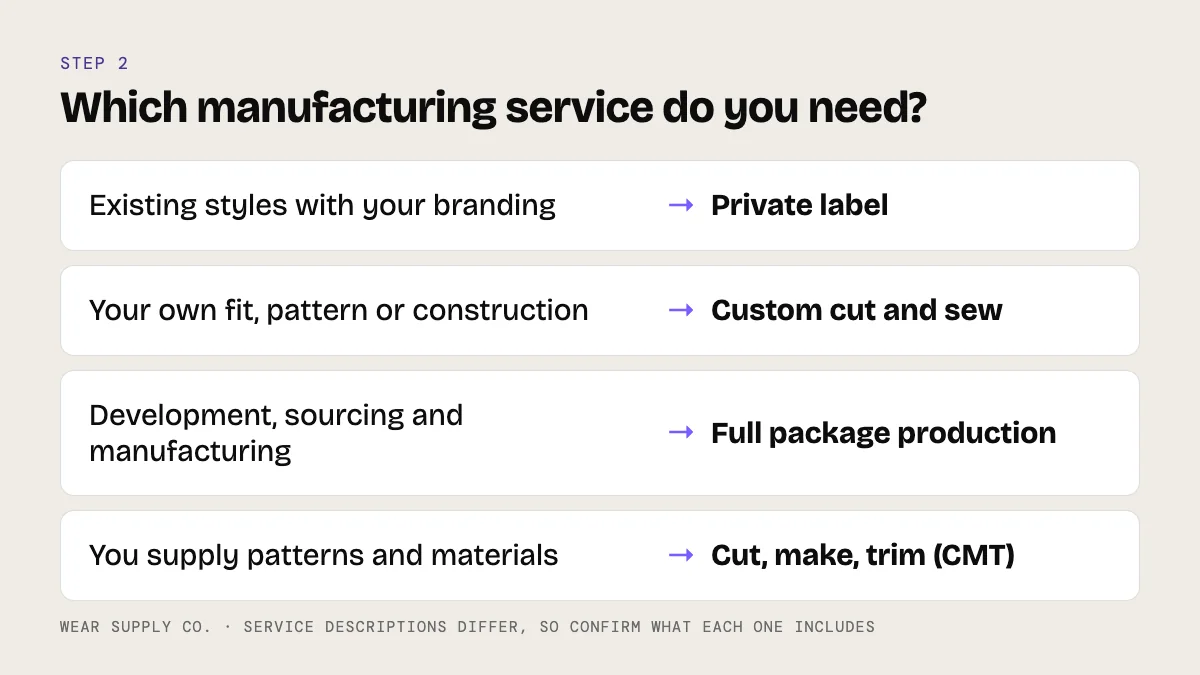
Service descriptions differ. Check out what’s included, like patternmaking, grading, sample revisions, etc. Apply the same requirements when comparing domestic and overseas suppliers. Not sure between the first two? Read private label vs cut and sew.
3. Narrow Down Your Research by Product
Search by your product name instead of using broad terms. “Small batch denim manufacturer USA” offers you a more relevant starting point than the generic “clothing factory.”
From patternmakers or fabric suppliers, you should explore apparel directories, sourcing events, and referrals, too. Before making contact, review examples of comparable garments.
Send the same brief to each shortlisted supplier, like:
“We’re developing 250 heavyweight cotton hoodies in two different colors, sizes S-XL. We require patternmaking and sampling support. Please confirm your minimums, development fees, and estimated timelines.”
When inquiries are comparable, you can easily find differences in scope, pricing, and responsiveness.
Pick your sourcing region
| Region | Strengths | Watch out for |
|---|---|---|
| USA / UK / EU | Fast shipping, easy visits | Higher cost, higher minimums |
| China | Huge capacity, every category | High minimums for small brands, communication gaps |
| Pakistan | Cotton, knits, fleece, denim, activewear; strong vertical factories | Choose a factory with clear English communication |
| Turkey / Portugal | Quality, near Europe | Higher pricing |
| Bangladesh | Very low cost at scale | Usually very high minimums |
If you're building a heavyweight streetwear or blanks brand, read why brands manufacture clothing in Pakistan.
4. Confirm Factory Limits and Skills
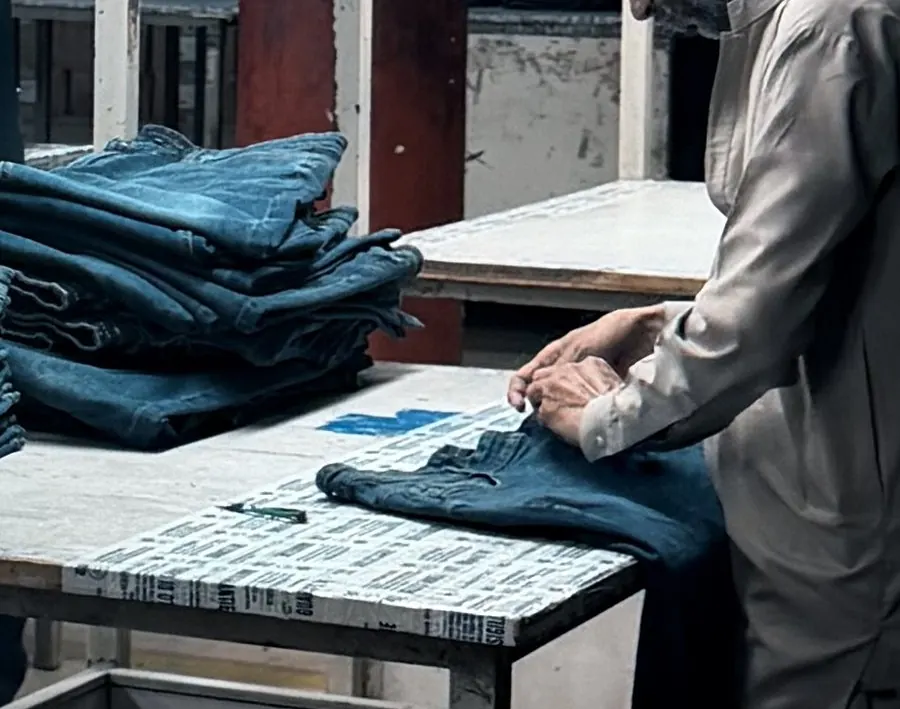
Learn production details, professionals responsible for management, and which tasks are outsourced. You can also ask for product samples, close-up pictures, and an overall tour. See our questions to ask a clothing manufacturer for a full list.
Also, confirm minimum order quantities (MOQs). Don’t pay before final details are agreed on and your technical questions are answered.
5. Compare Quotes and Test Samples
Request a thorough breakdown involving details about the production, inspection, packaging, and shipping costs. Clearly state who’s handling customs clearance and import duties for international orders, too.
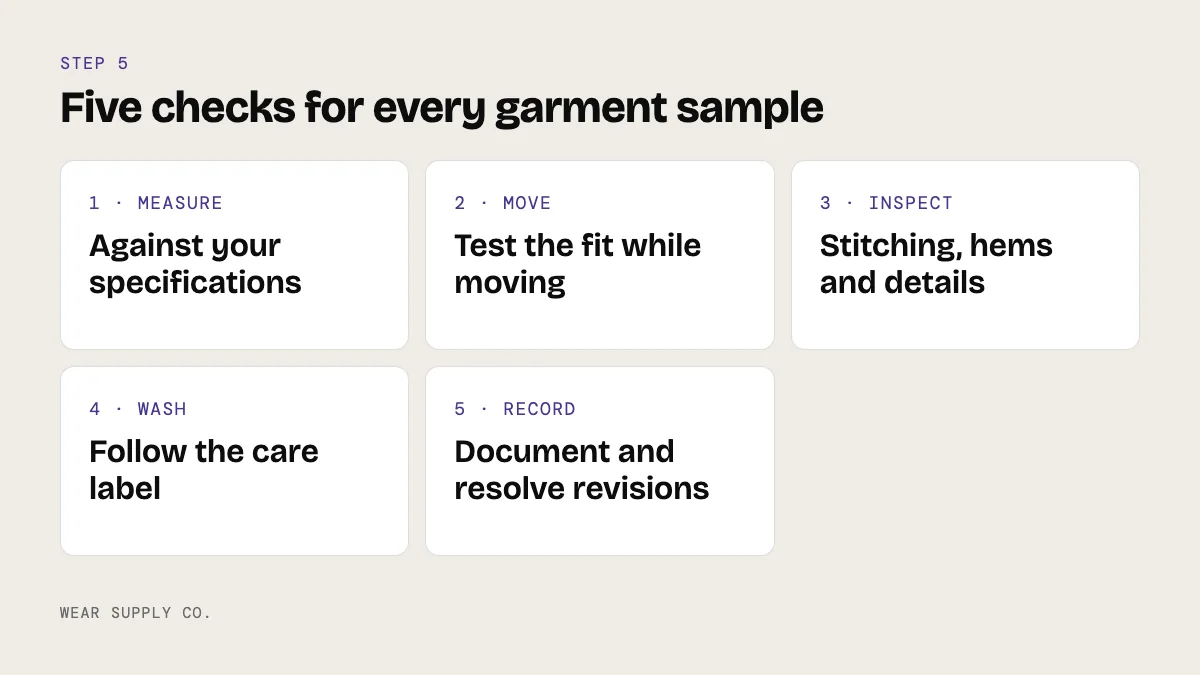
Check samples methodically:
- Measure against your specifications.
- Test the fit while moving.
- Check the stitching, hems, and details.
- Follow the care label during washing.
- Document and resolve revisions.
For bulk comparisons, keep an approved reference sample. Confirm US labeling responsibilities during production planning.
How long the whole process takes
| Stage | Typical time |
|---|---|
| Define product and tech pack | 1–2 weeks |
| Search and shortlist | 1–2 weeks |
| Questions, quotes and video tours | 1 week |
| First sample round | 2–3 weeks |
| Revisions (if needed) | 1–3 weeks |
| Bulk production | 3–5 weeks |
| Shipping | Days (air) to weeks (sea) |
Most brands should plan on two to four months from first search to stock in hand. Rushing the sampling stage is the most expensive shortcut you can take.
Common mistakes first-time brands make
- Contacting factories with a vague brief. "I want to start a clothing line" gets slow, generic answers. "200 heavyweight boxy tees in 2 colors, screen printed, 1 color front" gets a real quote.
- Choosing on price alone. The cheapest factory is rarely the best value once reprints, delays and returns are counted.
- Ordering too much, too soon. A 500-piece first run of an untested design is how most new brands run out of cash.
- Skipping the wash test. Wash your sample three times before approving. Shrinkage and twisting show up here, not in photos.
- Not putting it in writing. Confirm specs, price, timeline and payment terms by email or in a signed order, not just in a chat.
Red flags to watch for
- No photos or video of their own production.
- Refuses to make a paid sample before bulk.
- Prices far below every other quote.
- Vague answers on lead times or MOQ.
- Pressure to pay 100% upfront on a first order.
Ready to develop your product? Share with us your reference images or tech pack, garment type, and specific quantity. We produce from 10 pieces per style, per color, and you approve a physical sample before bulk production. Let’s discuss sampling and production options together!
Conclusion
To conclude, finding the right clothing manufacturer depends on your requirements with your product and checking the details before finalizing. For choosing a supplier, related experience, complete quotes, and approved samples matter. Document every aspect before bulk production to avoid legal complications.