
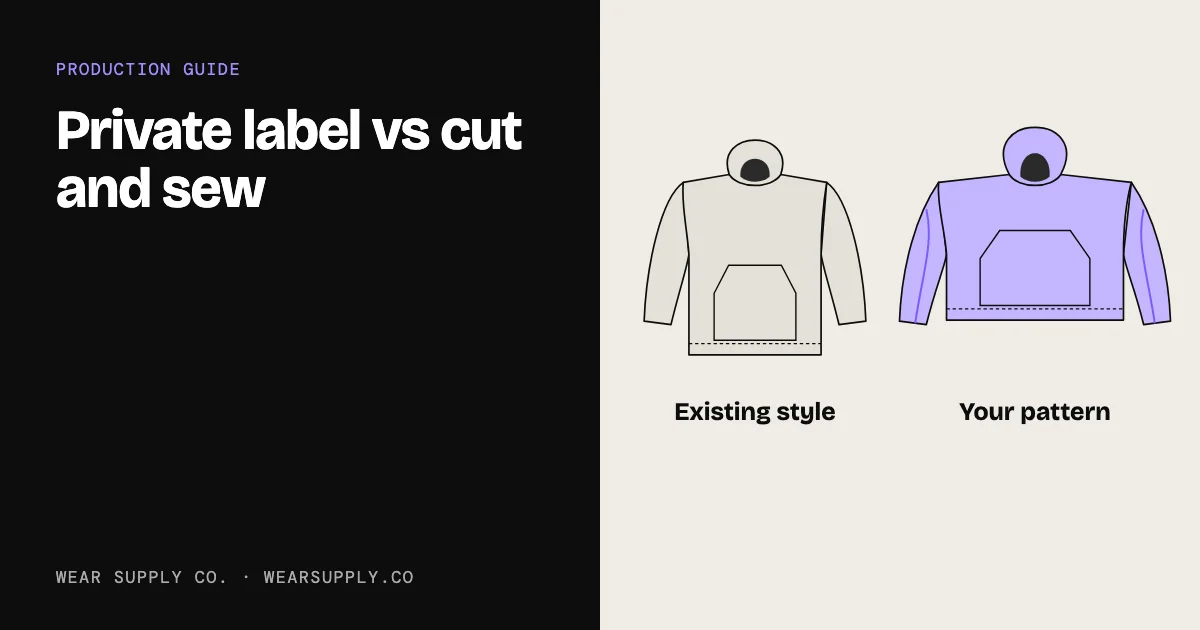
With any streetwear brand, it's frequently about what people are purchasing. A specially chosen blank can be a good fit for an original graphic. Cropped hooded style with a unique hood shape and cropped paneling needs further development.
Neither of the two routes offers better quality or better sales. This will depend on your choice of product, budget, and time. Understand the differences between existing style and custom.
What Does Private Label Mean in Clothing?
Private label generally means selling garments under your own brand using a manufacturer’s existing products or developed styles. Depending on the supplier, you may be able to add labels, prints, embroidery, packaging, or selected material and color changes.
The term varies between suppliers. One factory may offer ready-made blanks with replacement labels. Another may manufacture an established style after you order it.
When Does Private Label Make Sense?
Suppose your first drop features illustrated T-shirts. You find an existing shirt with the right neckline, sleeve length, and fabric feel. Developing another pattern may add little value.
Private label lets you concentrate on artwork, garment selection, and reaching customers. The limitation is that other brands may use the same base garment. Ask which details are exclusive and whether the style will remain available for reorders.
What Is Custom Cut-and-Sew?
Custom cut-and-sew means developing garments around your specifications, with fabric cut into pattern pieces and sewn into the required design. Development may include patternmaking, grading, fabric sourcing, and several sample revisions. Confirm which services the factory provides.
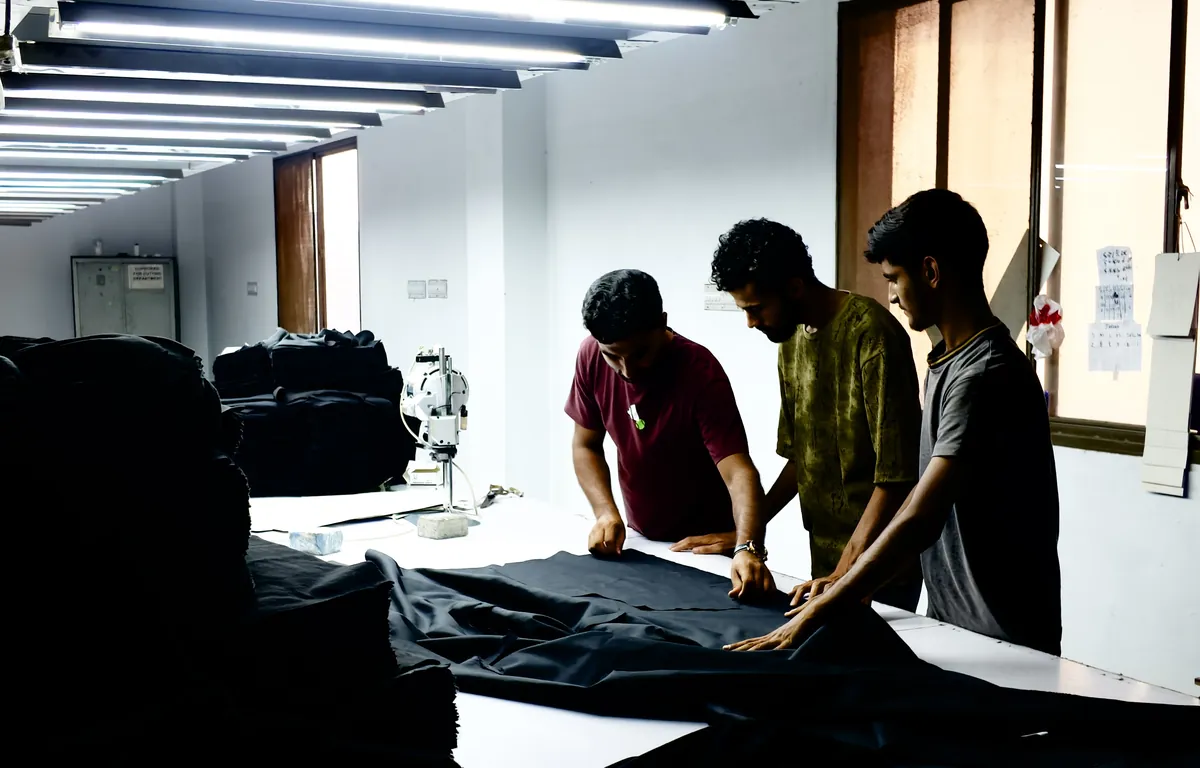
For streetwear, this could involve adjusting shoulder width, changing pocket construction, or developing a different body-to-sleeve proportion.
When Does Cut-and-Sew Make Sense?
Consider a hoodie designed around a wide chest, cropped body, deep hood, and curved sleeve panels. Adding a logo to a standard hoodie won’t achieve that result.
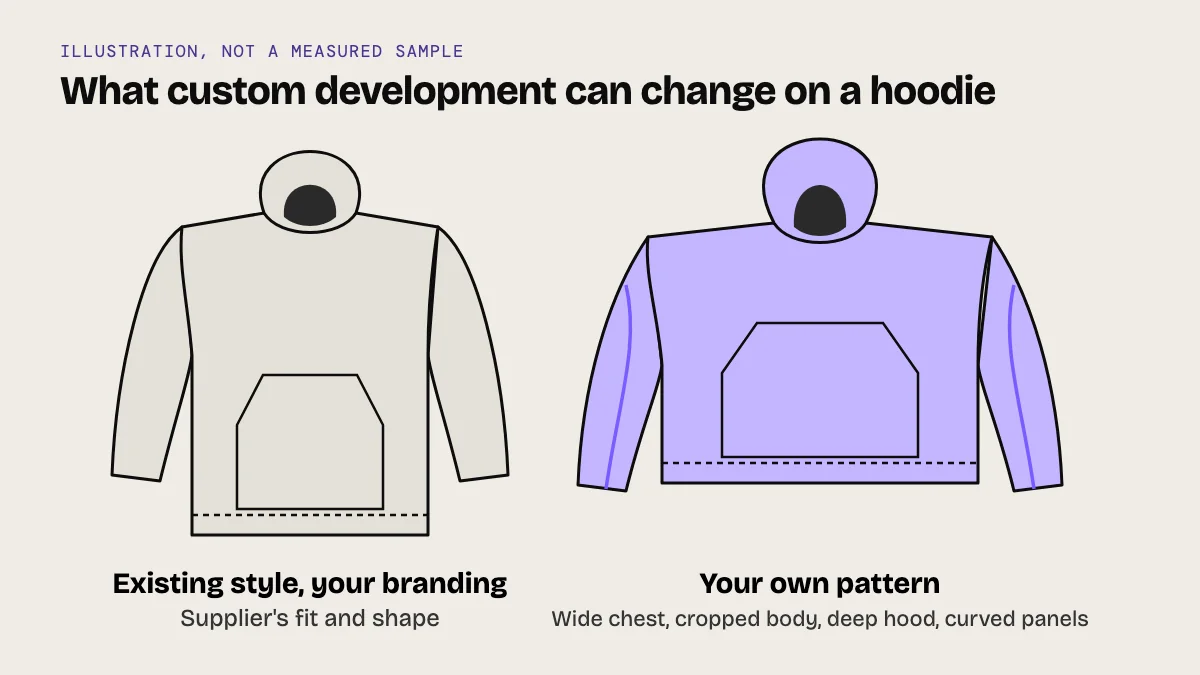
Custom development gives you more control, but each choice needs clear instructions and sample approval. Even “oversized” needs measurements: extra width alone may produce a garment that feels unbalanced.
Private Label vs. Cut-and-Sew at a Glance
| Factor | Private label | Custom cut-and-sew |
|---|---|---|
| Starting point | Existing garment or developed style. | Your specifications and pattern development. |
| Design control | Limited to the supplier’s options. | Broader control within factory capabilities. |
| Development spending | Usually lower when the base needs no changes. | Includes pattern and sample development. |
| Timing | Can be quicker if products and materials are available. | Requires time for development and approvals. |
| Minimum orders | Depends on stock, customization, and supplier. | Depends on fabric, trims, design, and supplier. |
| Main consideration | Does the existing garment suit your product? | Can you fund and manage the development? |
These are general differences. Ask for project-specific quotes and schedules rather than assuming every private-label order is faster or cheaper.
Compare the Full Cost Before Choosing
Private label can reduce development work, but decoration, relabeling, packaging, and delivery still cost money. A complicated embroidery design may substantially change the final quote.
With cut-and-sew, separate one-time development charges from recurring production costs. Ask about patterns, grading, samples, revisions, and fabric testing.
For both options, confirm:
- Minimum quantities per style and color.
- Charges for labels, trims, and packaging.
- Inspection and delivery costs.
- Applicable import costs for overseas orders.
- Reorder prices and material availability.
A low unit price becomes less useful if reaching it requires buying more inventory than your brand can reasonably sell.
Check Samples Before Approving Either Route
Private label still needs sampling. An existing style may have sleeves that restrict movement, a collar that loses shape, or a surface that doesn’t suit your print.
For custom garments, check the sample against the tech pack and document changes precisely. “Make it boxier” is less useful than revised chest and body-length measurements.
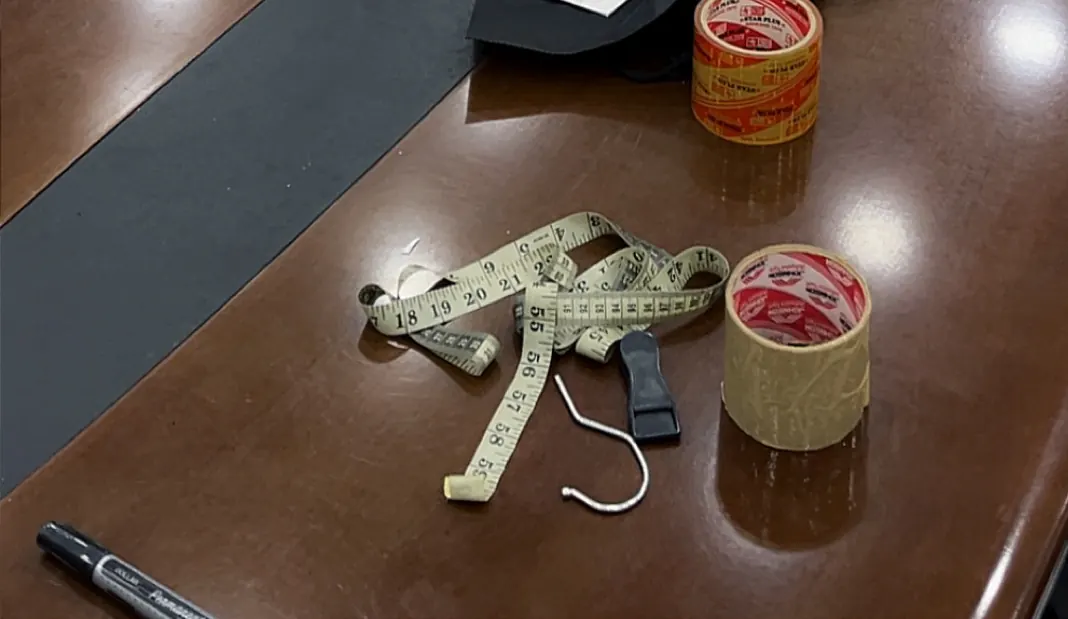
Try the garment on, inspect seams, and wash it according to the proposed care instructions. Check shrinkage, twisting, color changes, and decoration afterward.
Can Your Brand Use Both Methods?
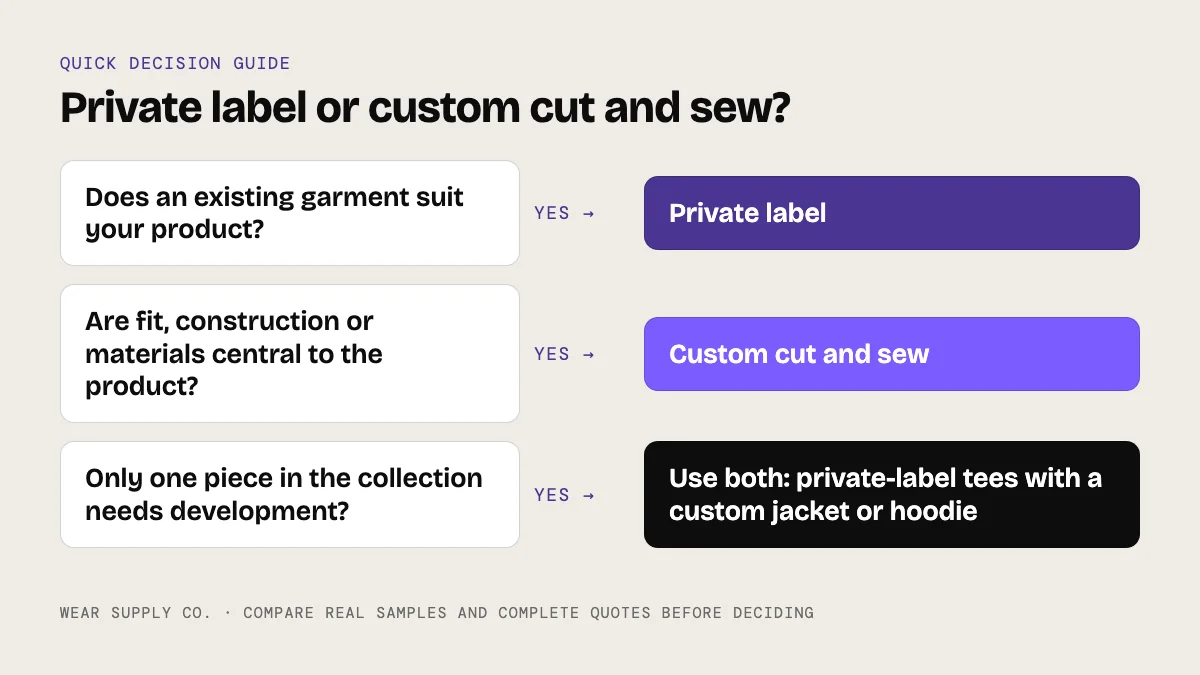
Yes. A collection can pair private-label graphic tees with a custom jacket or hoodie. This directs development spending toward the piece that needs it most.
Check that the collection still feels consistent in sizing, fabric quality, and finishing. Also confirm pattern ownership, access to production files, and any exclusivity arrangements in writing.
Planning your next drop? Share your designs and quantity. We produce from 10 pieces per style, per color, and you approve a physical sample before bulk production. Let’s discuss the right production option for your brand.
Conclusion
To conclude, private label works when an existing garment meets your needs. Custom cut-and-sew is worth considering when fit, construction, or materials are central to the product. Compare real samples and complete quotes before deciding where development spending will make a meaningful difference.