
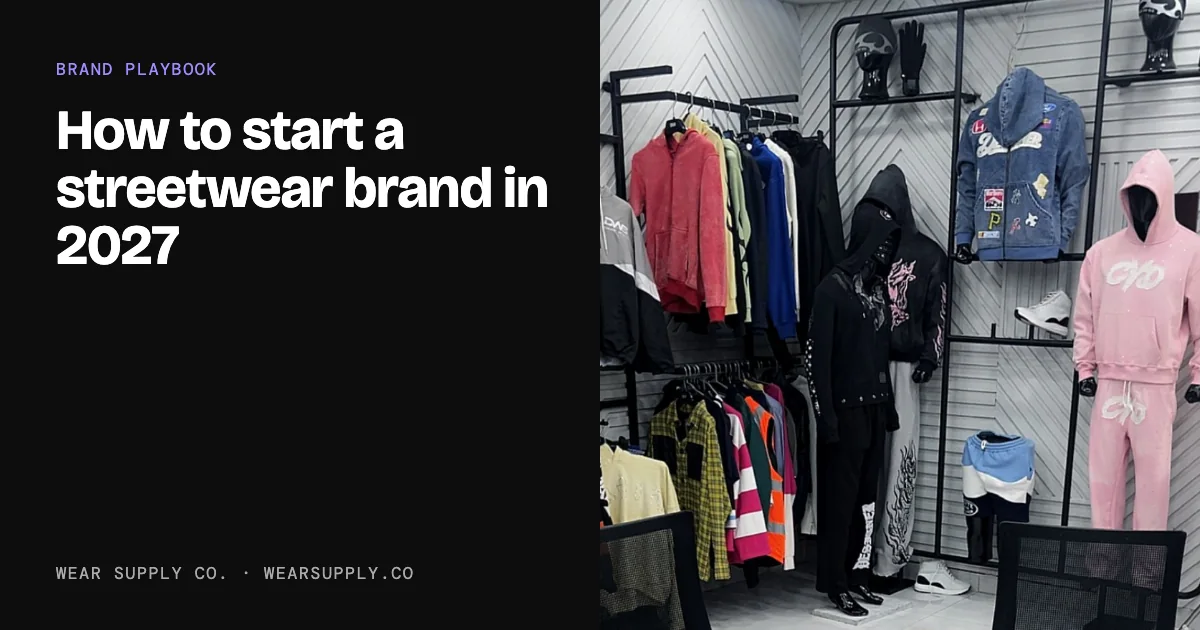
Everyone should have an obvious reason to purchase with the initial drop; the first drop is the collection that will be available on launch day. It could be something unique, something original, or something that links to a community that you know and understand. Select an appropriate range for good sampling and affordability of production. Confirm production, delivery, and fulfillment dates before announcing a date.
A launch needs clothes that match the photos and reliable delivery. Below is a step-by-step process you can follow to start a streetwear brand.
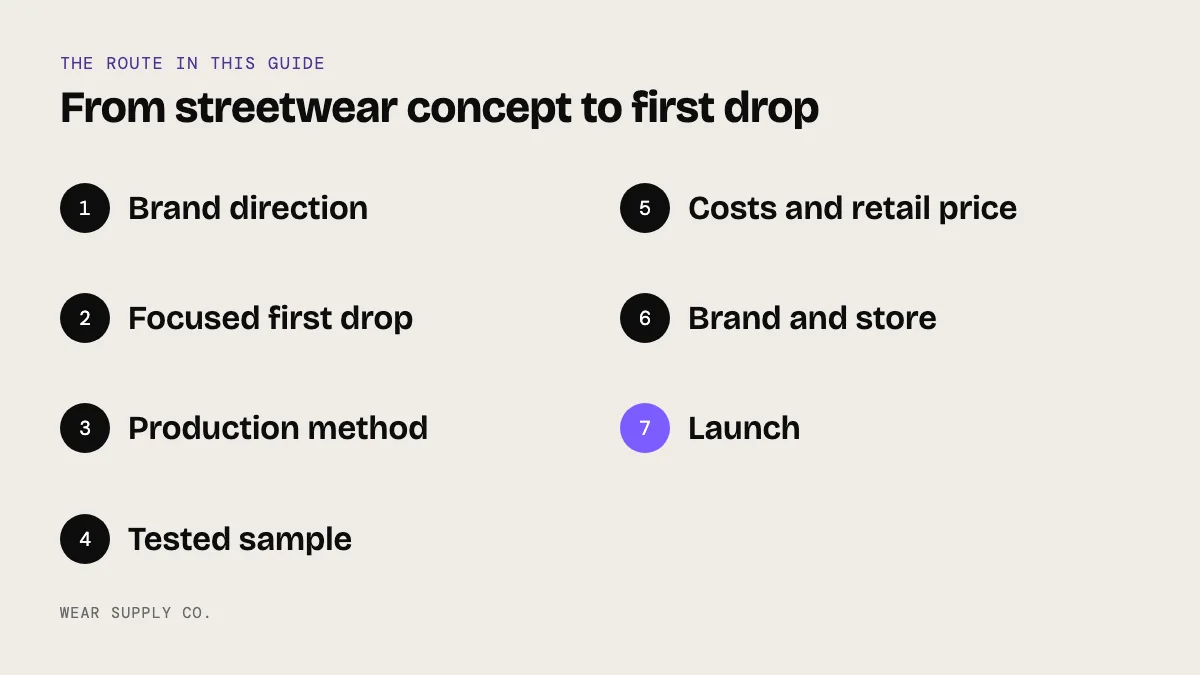
1. Specific Brand Direction
“Streetwear for everyone” provides little to no guidance for choosing fabrics, designing graphics, or setting prices. Begin with people whose style and buying habits you understand. Like, a skate-inspired brand will make different choices than a minimalist everyday label.
Write down:
- Your ideal customer and specific occasions they would wear the clothes on.
- Their current preferences.
- What are they struggling to find?
- Why should they choose your product in their wardrobe?
Also, speak with potential customers and read relevant reviews of comparable products. See complaints about short sleeves, weak collars, or inconsistent sizing. Such details reveal useful product opportunities.
A mood board is beneficial for establishing visual direction, but customer conversations help test whether the idea has buyers.
2. Plan Your First Affordable Drop to Develop
Your first collection doesn’t need ten designs. A single well-developed T-shirt and a matching hoodie give customers much room to understand your brand.
When you have more styles, colors, and sizes, it means more inventory variations to manage. Choose a main product and explain a core feature that makes it worth buying. You need to explain “Oversized.” Does it have wider shoulders, extra chest room, a shorter body, or longer sleeves?
Before you order inventory, show the concept and expected price to potential customers. Track email sign-ups and specific buying questions. Likes on your posts don’t tell you how many garments to manufacture.
3. Choose a Production Method for Your Streetwear
The production method you select should suit the product and your available budget.
| Production method | Useful for | Main limitation |
|---|---|---|
| Print-on-demand | Testing graphics without holding bulk inventory. | Customization depends on the provider’s catalog. |
| Decorated blanks | Adding prints or embroidery to existing garments. | Fit and fabric choices depend on available blanks. |
| Custom cut and sew | Developing your own silhouette and construction. | Requires more development work and upfront spending. |
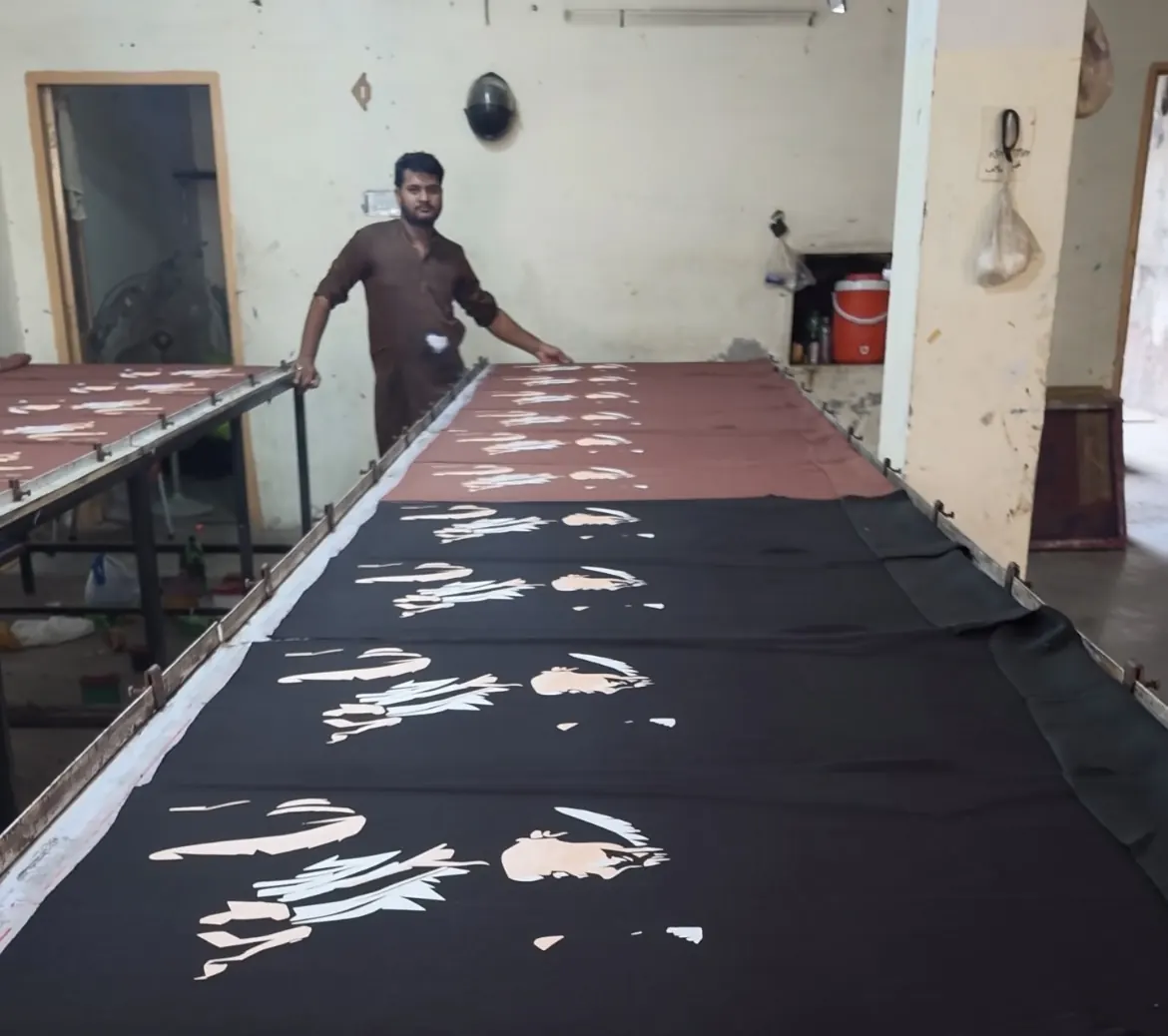
Print-on-demand produces items when orders arrive and reduces the need to buy finished stock upfront. It proves a great option for new streetwear brands. But you should still order physical samples before selling.
For custom manufacturing, ask them about minimums per style and color, fabric availability, subcontracting, and sample revisions. Use the same brief to compare the suppliers.
4. Convert Design into a Tested Sample
A reference image helps in understanding the direction. A tech pack shows how to make the garment.
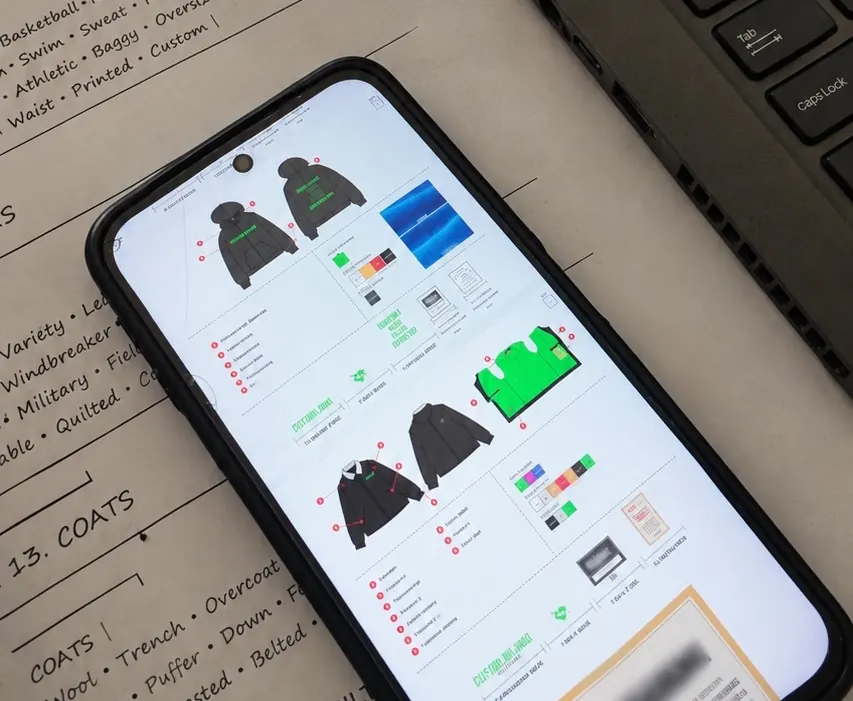
Include requirements like measurements, fabric composition, fabric weight, construction details, artwork dimensions, label positions, and packaging details. Be clear about acceptable measurement variations with your supplier.
Inspect More Than Appearances
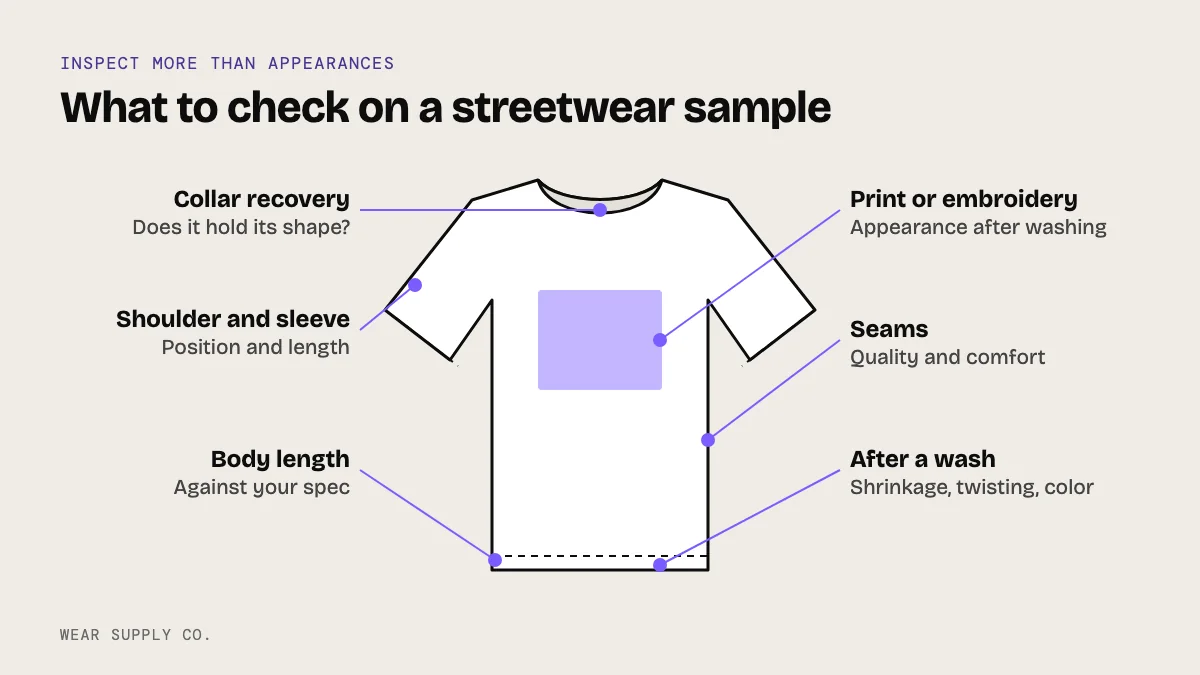
Try the sample on, move in it, and wash it according to specific care instructions. Inspect:
- Body length, sleeve length, and shoulder position.
- Collar, cuff, and waistband recovery.
- Seam quality and comfort level.
- Print or embroidery appearance after washing.
- Shrinkage, twisting, and color changes.
It’s useful when you have fabric weight measured in GSM, but heavy fabric doesn’t automatically mean better quality. All things matter, including the fabric, finish, construction, and intended use.
5. Evaluate Costs Before Setting Retail Prices
The factory price is only a part of what each sale costs. You should include inbound freight, applicable import costs, packaging, payment fees, fulfillment, shipping subsidies, and expected returns.
For an illustrative T-shirt order:
| Cost per shirt | Example |
|---|---|
| Garment and decoration | $12 |
| Inbound freight and packaging | $3 |
| Payment and fulfillment allowance | $4 |
| Total before marketing and overhead | $19 |
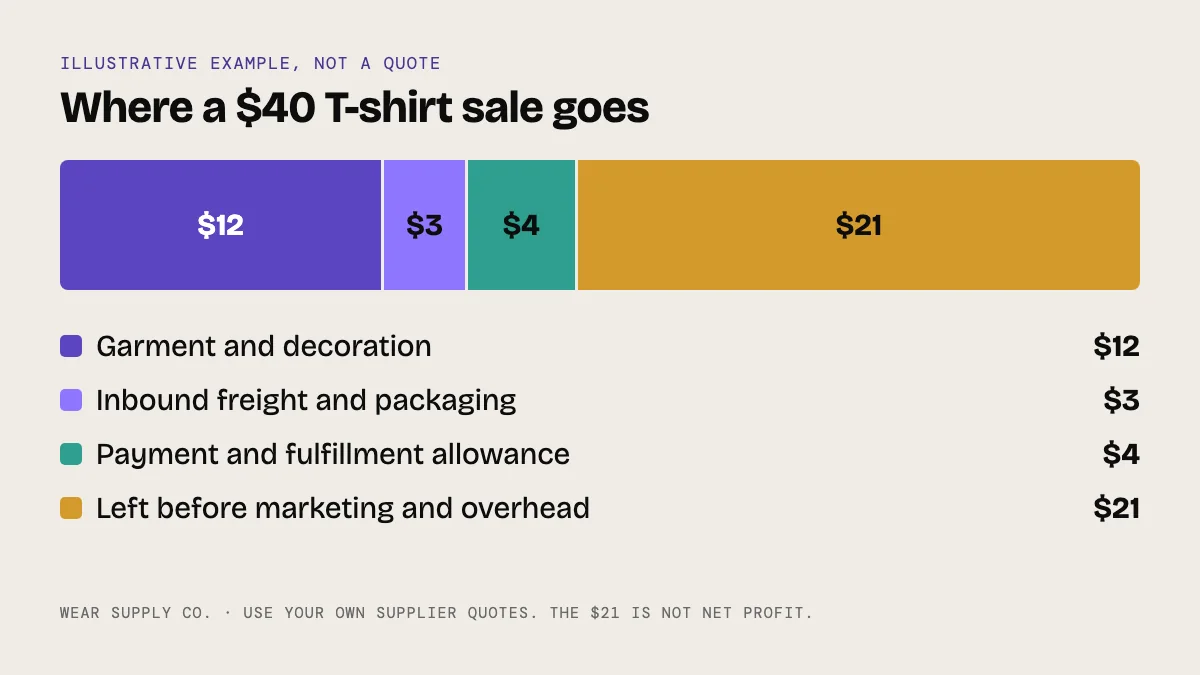
With a $40 selling price, that leaves $21 before advertising, development costs, overhead, and other expenses. It’s not net profit.
You must use supplier quotes instead of such example figures. Budget individually for samples, photography, your store, and launch promotion. For corrections and refunds, also keep cash available.
6. Prepare the Brand and Store for US Customers
Before paying for labels or packaging, check the proposed name. You can search online, review domain and social availability, and inspect potential trademark issues beyond the USPTO database.
Your product page must show real samples, garment measurements, fabric details, model sizing, care instructions, and shipping and return terms.
Complete a mobile purchase test. Then, inspect payment, inventory updates, confirmation emails, shipping charges, and the customer support contact.
Before approving labels, confirm applicable labeling requirements with your production partner.
7. Build Interest, Then Launch with Clear Expectations
Show the real work leading up to the drop. It can include fit changes, artwork development, sample comparisons, and styling. Explain different choices rather than posting repeated countdowns.
You can create an email sign-up page with product previews and the approximate price range. Work with relevant local creators or community members who would realistically wear the clothes.
Before launch, confirm:
- Available stock and size quantities.
- Accurate photos and descriptions.
- Packing supplies and fulfillment capacities.
- Shipping promises and customer support arrangements.
For preorders, set the shipping window to your confirmed production dates. According to FTC rules, you must have a real reason for your shipping promises and offer refunds or get customer consent in case delays happen.
After launch, inspect sales by size and style, returns, customer questions, and remaining stock before planning another drop.
Developing your first drop? Share with us your references or tech pack, along with product types and approximate quantities. We produce from 10 pieces per style, per color, and you approve a physical sample before bulk production. Contact us to discuss sampling and production options together.
Conclusion
To conclude, a strong first drop begins with a clear customer, a focused product range, and samples that have been carefully inspected. Procedures like development, pricing, and delivery matter as much as your artwork. When you understand every step and experience new options with proper strategy, you can build a better streetwear brand.